





Enhancing Packet Processing Efficiency through FPGA Technology
With digital acceleration and an evolving threat landscape, the foundational pillars of the company (network and security operations) are now under immense pressure. SMBs and even large enterprises both have reached a critical turning point: either evolve their infrastructure to support the demands of AI, hybrid cloud, and real-time data, or fall behind their competitors and lose money to recover expenses from cyber attacks. To battle this dilemma, AIDatacy are currently exploring a path forward to address these complexities.
Security shouldn't force a choice between speed and safety. iCyWALL FPGA integrates protection directly into your traffic flow. It ensures the network stays fast while resisting modern threats, keeping your infrastructure stable as requirements evolve.
Standard systems often slow down under heavy network encryption or deep packet inspection. iCyWALL FPGA moves these demanding tasks off the main processor and onto dedicated hardware. It processes data at the silicon level from Layer 2 to Layer 7 to maintain low latency encryption under any load. We are currently finalizing optimizations in our R&D labs for the official release.
The Business Risk of Stagnant Routing Architectures
Legacy infrastructure and technical debt are more than IT hurdles: they are financial liabilities. When organizations rely on static hardware and rigid telco agreements, they lose the ability to scale. This stagnation creates fragmented accountability between network, security, and application teams, often leading to infrastructure being involved too late in digital projects.
The cost of inaction is quantifiable, and often significantly higher than any technical roadblock. 2025 Cybersecurity Skills Gap Global Research Report from Fortinet has shown that 52% of organizations now report cyber breaches costing over $1 million in damages. On a global scale, according to the World Economic Forum the economic impact of cybercrime is projected to reach a staggering $23 trillion by 2027. Without a modern approach to encrypted routing and security, businesses face millions in recovery expenses, reputational damage, and a total loss of customer trust following a data breach, or cyber attack. Modernizing the environment has become an inevitability to reduce the blast radius of attacks and minimize downtime in an increasingly hostile threat landscape. By shifting to a proactive model, enterprises can finally align their security operations with enterprise risk management objectives through data-driven insights.
Upgrading to modern routing eliminates the high costs of legacy systems and helps businesses react faster to security breaches.
Why Infrastructure Modernization is a Strategic Imperative Now
The biggest problem with keeping a traditional security system is the sheer amount of manual work it requires. It is hard to justify that kind of upkeep when there is a global shortage of 4.7 million cybersecurity professionals according to Fortinet. Teams are already stretched thin, and they shouldn't be spending their time on routine configurations or managing technical debt.
Moving to FPGA-based automation changes the dynamic by handling those security policies directly in the hardware. Instead of forcing packets to wait in a CPU queue or pass through multiple software layers, data is processed in parallel the moment it hits the chip via Parallel Gate Execution. This architecture enables nanosecond-scale control that remains entirely independent of operating system latency. This shift isn't just about lowering expenses: it's about moving your best people from maintaining the status quo to driving future growth.
A New Logic: Why FPGA Matters for Encrypted Traffic
Our engineering team chose FPGA (Field-Programmable Gate Array) because it offers a level of flexibility that standard chips cannot touch
Traditional hardware like ASICs is fast but frozen; once the silicon is set, it can’t adapt to new encryption standards like Post-Quantum Cryptography. On the other end, SmartNICs and DPUs offer offloading but often rely on software cores that introduce unpredictable lag. FPGA sits in the sweet spot. Think of traditional hardware as a house with fixed walls. If you need more space, you are out of luck. FPGA is more like a modular space that can be reconfigured instantly at the hardware level.
When we talk about "wire-speed," we are referring to a specific benchmark logic that moves beyond marketing peaks. Our goal is 200Gbps throughput with deterministic, nanosecond-scale latency.
This allows the system to process encrypted traffic and neutralize threats at machine speed without the usual performance trade-offs. Speed is the deciding factor in modern defense, according to The 25-Minute Ransomware Attack from Palo Alto, ransomware can now complete its encryption process in as little as 25 minutes. By moving security policies directly into the silicon, we eliminate the software lag that often gives attackers the window they need.
During this optimization phase in our lab, we are focusing on three major technical goals:
-
Silicon-Level Enforcement: Stripping away the software lag by hard-coding security rules.
-
Direct-Path Intelligence: Moving threat detection into the data flow, not beside it.
-
Zero-Blindspot Visibility: Managing encrypted traffic between the cloud and the edge without performance drops.
We are still refining these mechanisms to move security away from reactive firefighting. The aim is a proactive, adaptive state that handles tomorrow’s threats at today’s speeds.
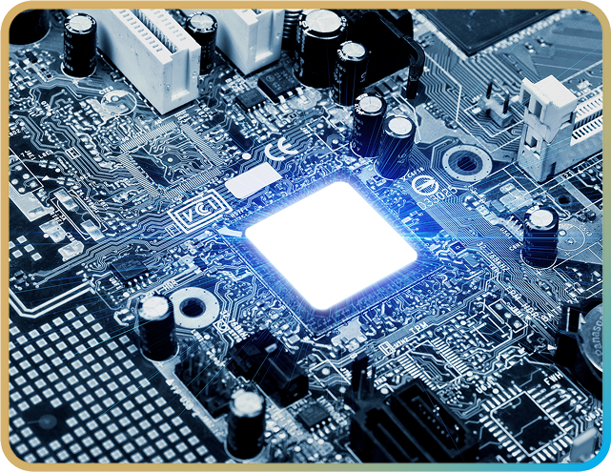
FPGA technology enables hardware-level security to stop threats at machine speed without software lag.
Proven Success Saving Millions and Ensuring Speed
The value of shifting toward an integrated, data-driven architecture is proven by large-scale enterprise successes. According to A Strategic Roadmap for Modernizing Amidst Complexity from Fortinet, Kyndryl achieved continuous modernization by moving away from legacy environments that were no longer fit for purpose. Their transformation resulted in savings between 200 million and 300 million USD in SG&A expenses over time. This shows that updating your infrastructure is a fundamental shift in business viability rather than just a minor technical fix.
For defense or national data, a slow network is dangerous. Software firewalls are too unpredictable because their speed changes whenever the system gets busy. FPGA is different. It stays steady. Even if traffic hits a massive spike, the performance doesn't budge. Since the security is handled at the hardware level, it is always fast. It doesn't need to wait for the software to catch up.
Strategic Advantage: FPGA vs. Traditional Rigid Hardware
Choosing between traditional hardware and programmable infrastructure marks a shift from rigid spending to a truly adaptable business model. Standard firewalls use static chips that are frozen in time. When technology advances, those chips can become a liability. In contrast, FPGA is a "blank slate" that we can reprogram remotely. This means your infrastructure stays modern without the constant "rip and replace" cycle of legacy gear.
Legacy systems often trade speed for security because their checks happen in the software, which creates a performance bottleneck. We solve this by embedding Zero Trust directly into the hardware gates of the FPGA. Our goal is ironclad security at machine speeds, ensuring that your growth is never slowed down by your safety.
This level of flexibility also makes global compliance simple. While old systems struggle with changing data laws, our FPGA approach lets you adapt your routing and encryption. You are not just buying a firewall: you are investing in a future-proof platform that secures your business value as you scale.
Securing the Future with Decisive Action
Traditional infrastructure shouldn't force a trade-off between network speed and security. We are currently finalizing our FPGA-based routing in the lab to eliminate those bottlenecks through hardware-level automation.
Stop letting rigid hardware limit your network. Contact us to discuss how iCyWALL FPGA can be tailored to your specific environment and security challenges.